The Crowd Is The Show
Why Your Outrage Is Part Of The Performance.

Before a single review was written. Before the awards conversation began. Before any of the discourse that would define the Marty Supreme campaign took shape. Chalamet had already made his first move.
An eighteen minute Zoom call. Entirely written and directed by the thirty year old movie star. His idea from start to finish. He later confirmed it plainly: “That Zoom I wrote and directed. It was my idea.”
In an industry still running on the infrastructure of a previous era, someone had decided to operate outside its norms entirely.
Content creator Eugene Healey framed the underlying shift clearly in a recent TikTok. “Historical fame and presence does not guarantee engagement. Celebrities are deliberately designed as empty vessels for Hollywood to overlay their own aims and desires onto so they actually need Hollywood’s centralization and distribution networks. Creators are the opposite. They’re built to thrive in this decentralized model. They have to build their own distribution networks, their own direct relationship with the audience. Today’s most successful celebrities themselves are creators.” His primary example is the Marty Supreme campaign, noting that Chalamet’s “weird little stunts formed the vast majority of the marketing.”
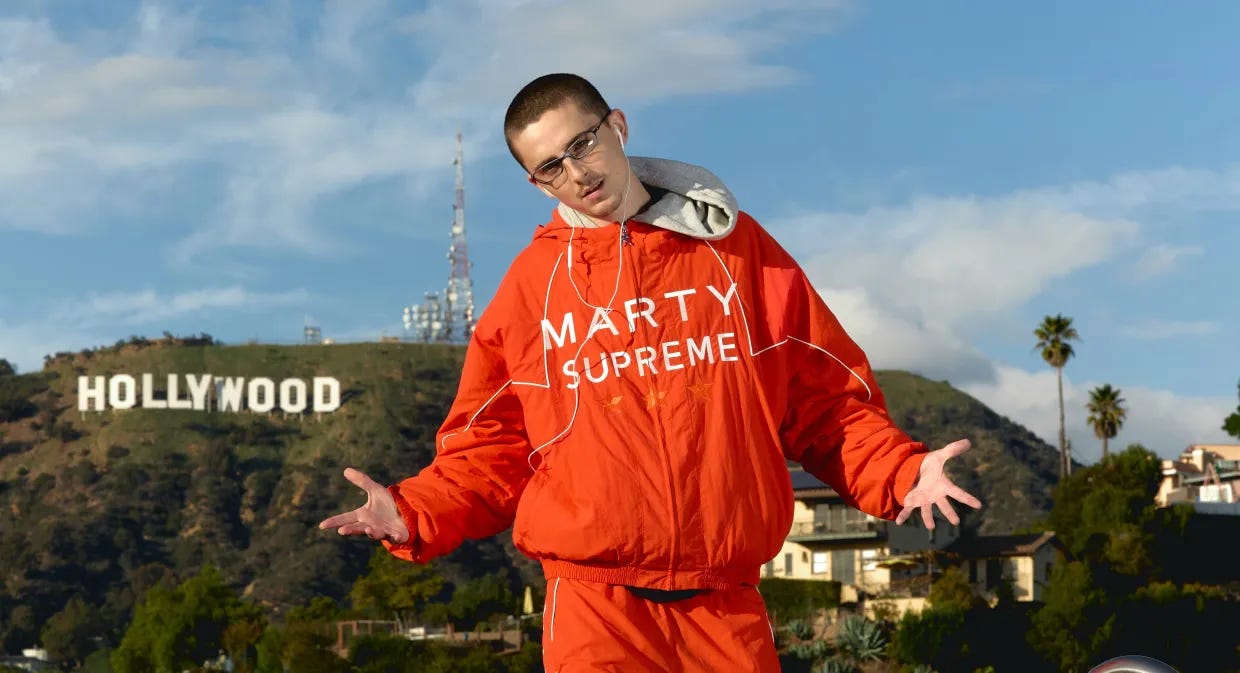
He supports this with two voices from inside the industry. TikTok’s David Roland argued that in an era of endless content choice, all attention must be earned. L’Oreal’s EU CMO Güven Dalgıç put it more sharply: relevance beats visibility. A mass market campaign with shallow broad appeal doesn’t stand a chance against content designed to resonate deeply with a specific audience. As Healey concludes: “The media and the cultural environment dictates that this is how things need to be done now.”
The Marty Supreme campaign didn’t just reflect that shift. It committed to it fully.
The viral interviews. The “top-level shit” clip. None of it looked like a conventional awards campaign because it wasn’t one. It was a creator operating with a level of digital media fluency that most of his peers are still approaching with the instincts of an older model. The campaign didn’t ask for passive reception. It demanded active engagement. It was engineered to generate exactly the kind of specific, highly shareable discourse that the system rewards.
Relevance doesn’t come from visibility anymore. It comes from resonance. And resonance requires the kind of direct, specific, sometimes polarizing relationship with an audience that traditional celebrity was never designed to sustain.
Chalamet said as much himself. In his conversation with Matthew McConaughey he was unusually direct about where he was operating from:
“People said it was promo but it’s not promo, it’s a creative extension of the movie. I’m restless, I’m hungry and I’m in the pocket. Every incentive is to move in fear. I don’t want to move in fear, I want to move in confidence and joy. Even with the promo stuff, if I can push the line, someone here when they’re promoting their thing is gonna be able to push it more. We work in a really institutionalized industry. People can get a little uncomfortable pushing against that. I feel like that’s my job. I’m gonna push the edge baby.”
When McConaughey asked how much of this was calling and how much was hands on the wheel, Chalamet didn’t hesitate: “I feel like I’m right in the driver’s seat.”
That’s not a performer accidentally revealing something. That’s someone telling you exactly what they’re doing and why. The press tour wasn’t separate from the work. It was the work. And he knew it from the beginning.
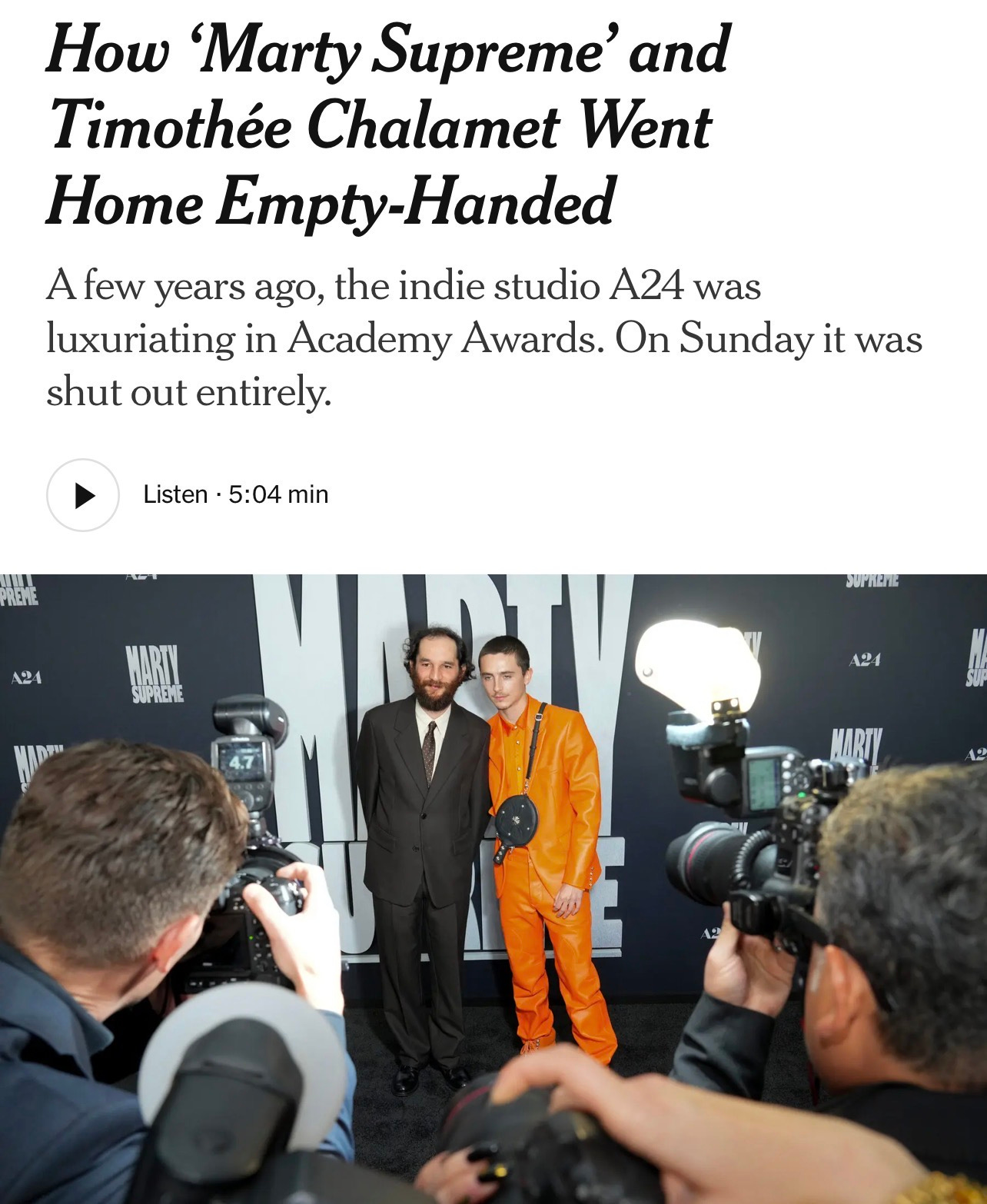
That the campaign went 0 for 9 at the Oscars is worth sitting with. Not as evidence that the strategy failed, but as a symptom of two worlds that have stopped speaking the same language. Hollywood showed up to reward what it has always recognized: prestige, tradition, and institutional credibility. The attention economy was grading on entirely different criteria. The most culturally generative campaign of the awards season went home empty handed not because it didn’t work, but because the room it was being judged in was still running on a different operating system. The Academy and the algorithm are not yet fluent in each other’s language. And that gap, more than any individual win or loss, is what the Marty Supreme campaign revealed.
This is where the audience comes in and things get complicated.
Two comments in response to my last TikTok that are worth examining here. Not because they were the most popular or the most extreme. But because they each came closer than most to understanding what actually happened during the Marty Supreme press tour, and in doing so revealed what the attention economy makes so difficult to see clearly.
The first argued that kayfabe theory doesn’t apply here because a wrestling audience understands the performance is constructed. The general moviegoer doesn’t. And when you market to people who aren’t in on the storytelling, the result isn’t intrigue. It’s alienation. People simply didn’t want to go see the film.
Reasonable on its surface. But it operates with an outdated model of what a moviegoing audience is in today’s world. The general moviegoer is also a TikTok user, an Instagram user, a YouTube user, someone who encounters clips, commentary, and discourse before, during, and after the theatrical experience. The conversation happening outside the theater doesn’t stay outside the theater. The moviegoer who walks in having absorbed three weeks of friction filled discourse about Chalamet’s apparent arrogance is not watching the same film as someone who walked in cold. The press tour doesn’t just sell the film. It pre-frames it. The audience is always already in on something, even when they don’t know it.
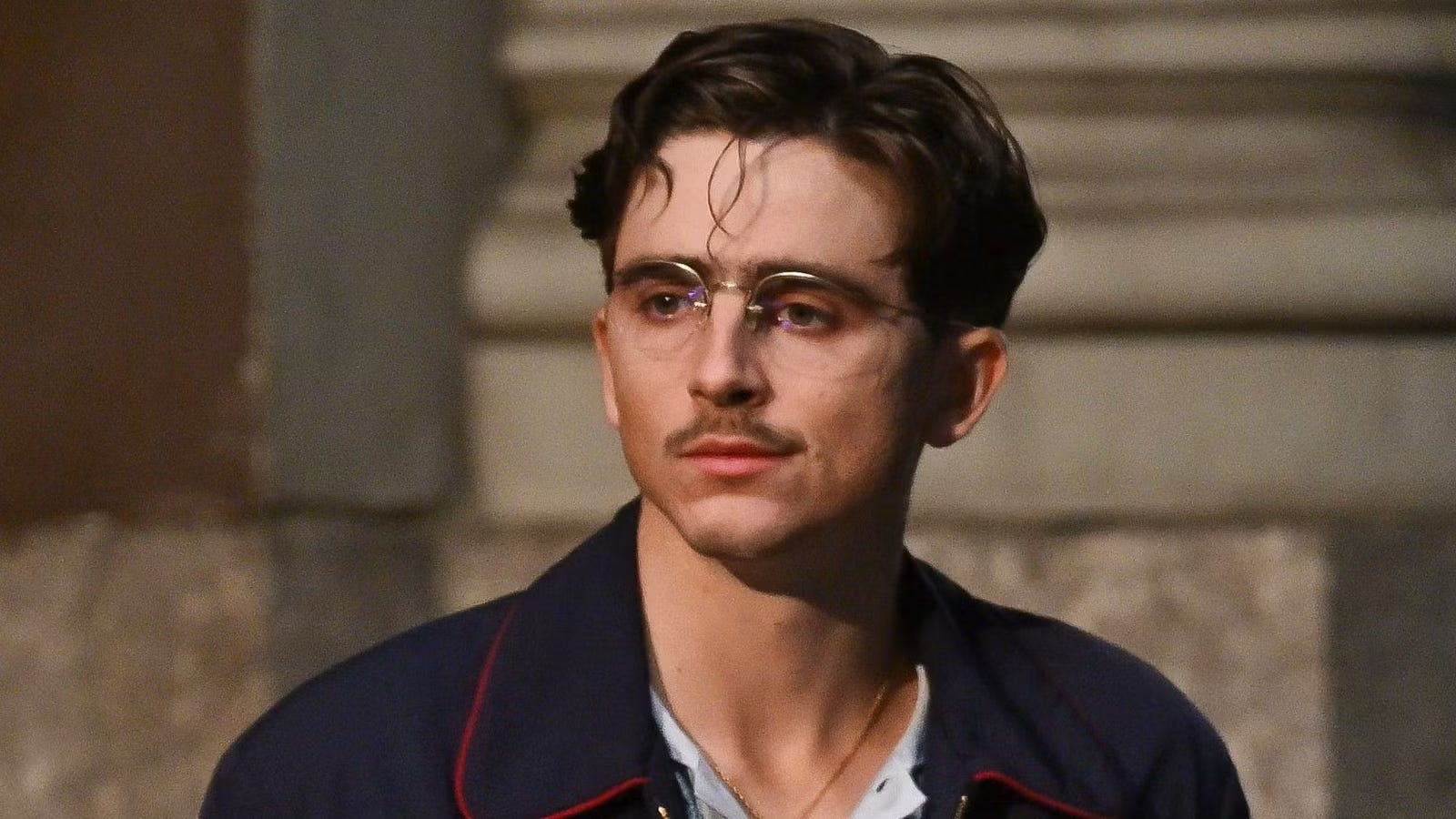
The second comment, from friend and writer quietarchitectures, was more perceptive. The issue, she argued, wasn’t simply that the press tour was excessive. Marty Supreme as a film is built around a specific archetype, the ambitious, ego driven, charismatic figure whose legend is inseparable from his excesses. The film critiques that archetype even as it celebrates it. But somewhere along the way the press tour stopped functioning as critique and started functioning as embodiment. What started as an actor promoting a character who mythologizes himself became indistinguishable from an actor mythologizing himself. The line between calling something out and becoming part of it had quietly disappeared.
The heel doesn’t just perform the archetype. The heel needs the opposing audience to perform outrage in response. The booing crowd isn’t simply reacting to the heel. They’re completing the heel’s function. Without the crowd’s visible rejection, the heel has no heat. The rejection is what makes the character work.
If the Marty Supreme press tour was a deliberate performance of the ambitious, egotistical, self-mythologizing archetype that Stewart’s critique identified and warned about, then the audience that responded with frustration and criticism didn’t push back against that performance. They completed it. Their presence in the comment section, their outrage, their debate about whether he was being genuine or arrogant, all of it performed the function of the crowd that gives the heel heat. Without their disapproval the performance has no friction. Without friction it has no life. They became the crowd the performance required without realizing they had walked into the arena.
The identification observed wasn’t a flaw in the system. It was the system working exactly as designed. The outrage in the comment section wasn’t resisting the performance. It was finishing it.
Think about what that means for a moment. Every think piece written in frustration. Every comment thread debating his sincerity. Every TikTok response calling out the arrogance. All of it was participation. All of it was signal. All of it fed the machine. The people most certain they were seeing through it were the ones sustaining it.
What made the reaction so specifically intense, so personal in its frustration, wasn’t just cultural politics. It was parasocial investment. For a significant portion of his audience, Chalamet wasn’t a stranger doing something provocative. He was someone they felt they knew. The vulnerability of Elio, the sensitivity, the emotional openness, had built a relationship over years, one sided but genuinely felt, that created a specific expectation of who he was. When the Marty Supreme persona arrived, ambitious, provocative, deliberately difficult to read, it didn’t just challenge a public image. For that audience it felt like a betrayal by someone they trusted. That’s why the Stewart lens resonated so deeply with so many people. It wasn’t just a critique of male artistic mythology. It was a framework that validated something that already felt personal. And personal reactions generate the most heat of all
This is where the accountability paradox becomes structural rather than personal.
The instinct, particularly from the Stewart critique, is that accountability should be straightforward. Say what you mean. Be honest about your intentions. Step outside the performance and speak plainly. But that instinct was formed in a media landscape that no longer exists.
Even if Chalamet wanted to break kayfabe completely and speak plainly, the system would absorb it. A sincere clarification doesn’t generate the same algorithmic reward as a provocation, nor does it travel as far. The correction gets buried not because it isn’t real but because it isn’t engaging. The system has no interest in resolution. Only tension.
Provocation spreads at the speed of the algorithm. Sincerity simply doesn’t carry that far.
Which brings this argument to its most personal point.
When people respond to this argument by saying I don’t want to be part of the kayfabe performance, I didn’t agree to this, I’m just reacting honestly to what I see, what are they actually saying? That their attention doesn’t count? That their engagement is somehow exempt from the system everyone else is feeding? It isn’t. You do want to be part of it. That’s why you’re here. That’s why you’re watching. The algorithm didn’t need your permission. It just needed your attention. And you already gave it.
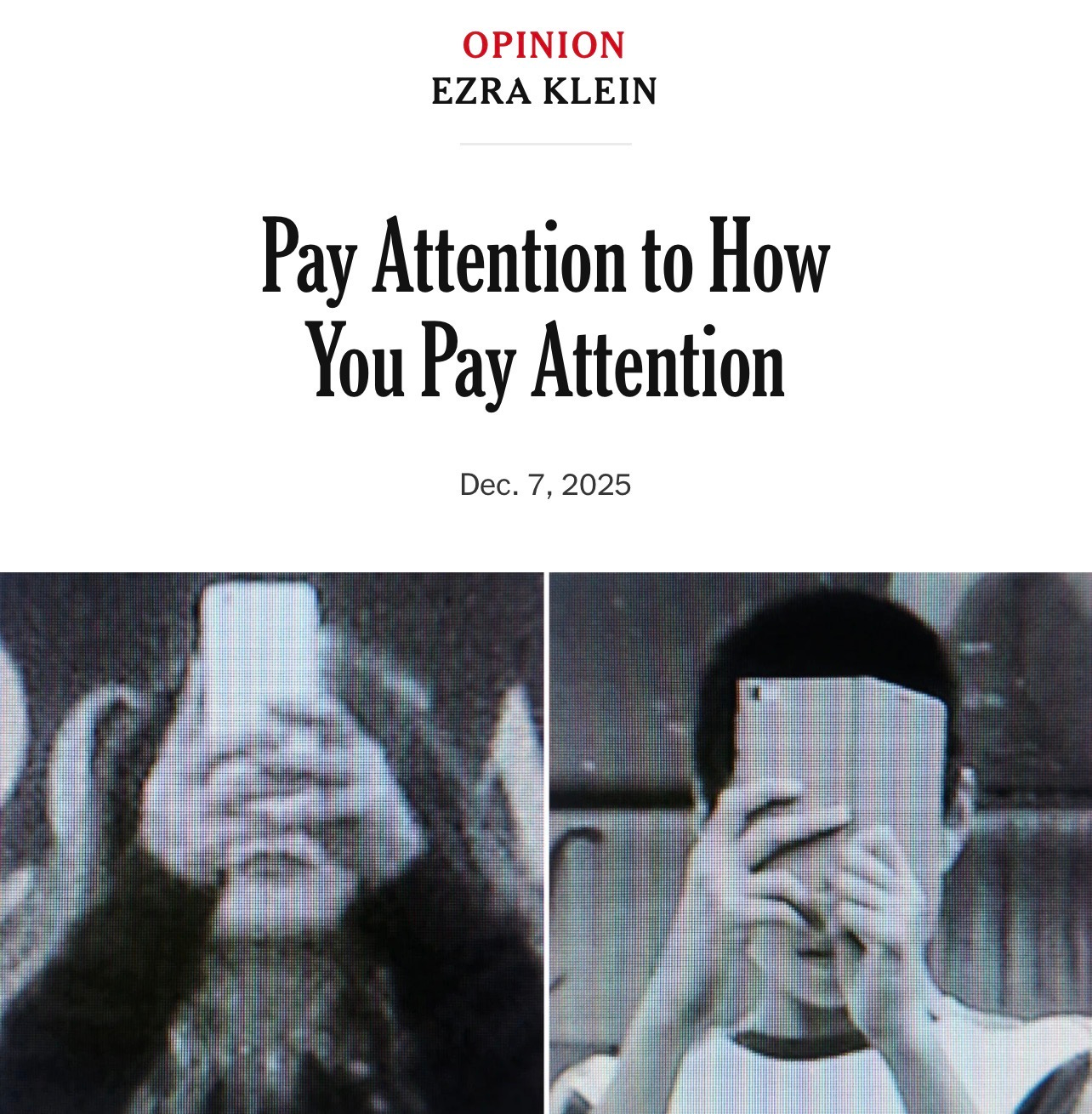
Audiences have traditionally been understood as passive. Downstream. The people who receive the performance rather than participate in it. But parasocial dynamics and social media have fundamentally dissolved that boundary. We are no longer outside the system looking in. We are inside it. Every time we share a clip, enter a debate, post a reaction, or even pause on a video long enough for the algorithm to register our attention, we become part of the distribution infrastructure. We are not just watching the performance spread. We are spreading it.
Every reaction registers as the same signal to the algorithm. It doesn’t read intent. It doesn’t measure whether you’re approving or criticizing. Whether Timothée is the face or the heel. It measures whether you stopped. Whether you shared. Whether you commented. Whether you watched it twice. All of it tells the system that this content is working. All of it ensures the content travels further.
The crowd’s disapproval is not a check on the performance. It is fuel for it. The outrage and the appreciation are functionally identical inside the system that distributes them. Both keep the show running. Both serve the same system regardless of what they actually say.
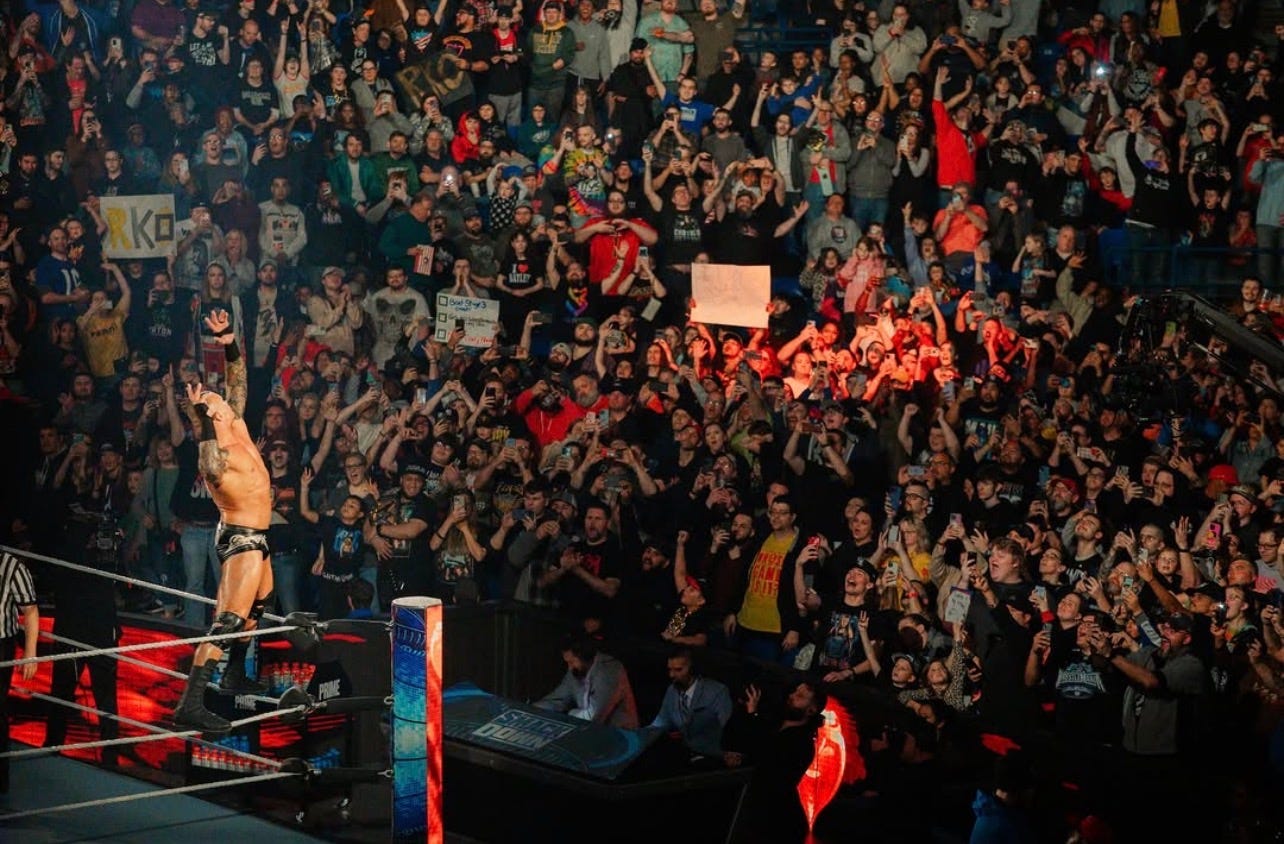
In wrestling, the performance needs the crowd to believe. Without that belief the whole thing collapses. The crowd’s reaction isn’t separate from the show. It is the show.
In the attention economy there is no closing bell. The crowd never goes home because the reaction gets captured, redistributed, and fed back into the system as new content. New clips become new debates. And new audiences encounter the performance for the first time weeks or months after the original moment. The performance never stops because the crowd never stops generating signal.
The performers who blurred reality and performance in previous eras, the Andy Kaufmans, the Joaquin Phoenixes, were doing so inside a media landscape with natural boundaries. When the show ended the crowd went home. The illusion had edges.
The reality we exist in doesn’t.
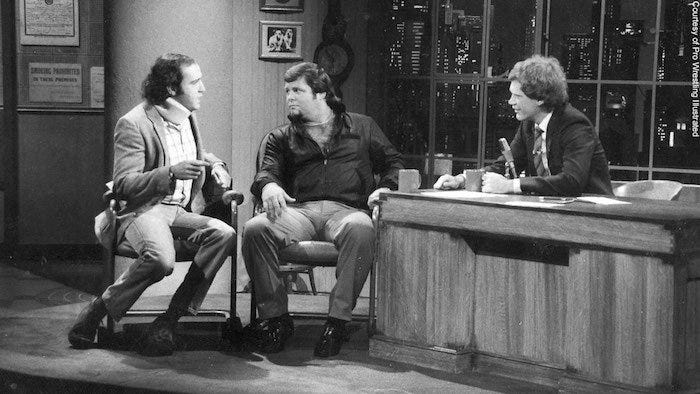
What Chalamet may have understood earlier than most is that in this environment the old question, is this real or is this performance, is no longer the right one. It assumes a boundary that the system has already dissolved.
But here is the thing that really stays with me.
Even if every reading in this series is correct. Even if you lend me good faith on the kayfabe framework as the right one. Even if the press tour was deliberate, artful, and structurally sophisticated. The bruises are still real. The audience’s frustration is real. The parasocial investment some people felt was real. The emotional responses the system amplified and redistributed are real. None of that stops being real just because the framework that generated it was intentional.
And that is the final thing worth sitting with.
Not whether Chalamet is performing or authentic. Not whether the Stewart critque or the Kayfabe Theory has the right reading. But whether a system that cannot distinguish between real provocation and performed provocation, that rewards both equally and amplifies both indiscriminately, is one we should be participating in as uncritically as we do.
This is where we are now. And it is naive to believe there exists a version of this landscape that will ever make itself legible without effort on your part. The attention economy is not going to slow down. It is not going to become more honest or more transparent or easier to read. The comment that says I don’t want to be part of the kayfabe is the same impulse as refusing to acknowledge your own role in a system you help sustain every time you engage with it. Condemning it from the outside is not enough. It requires you to develop the critical awareness to navigate it from the inside. To ask harder questions of yourself about what you’re watching and why. About what your attention is actually doing in the world.
No one is coming to save you from the complexity of this system. You must do that for yourself.
Chalamet appears to have already asked himself these questions. The audience is still deciding whether to bother.